Getting to Know the Singapore Taxation System
The same is also applied to the Singapore taxation system. It also has its rules and policies every citizen is following. Let us discuss some of them.
Under the Singapore taxation system, the tax return is due every April 15. The tax year runs from January 1 to 31 December annually.
Individuals receive a letter, tax return or a text message every February or March from the Inland Revenue Authority of Singapore (IRAS), signaling them to file their returns. They can accomplish these either via electronic platforms or paper filing.
The details for employment income are usually submitted by the employers via digital platforms to the IRAS. With this, the tax authority will inform these employees that they won't need to file a tax return anymore, unless they have to report additional income sources.
The tax is usually due for payment within a month from the date the IRAS issued the notice of tax assessment.
How Much are the Tax Rates in Singapore?
The Singapore taxation system, like any other regime, has a schedule of taxes individuals are following closely. It varies based on your chargeable income and whether you are resident or nonresident.
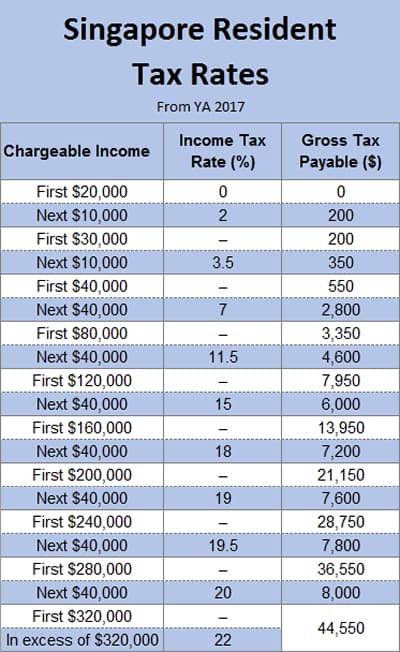
For resident taxpayers, the income tax is calculated using a progressive tax rate schedule.
Individuals earning SGD 20,000 annually are exempted from paying taxes. Meanwhile, taxpayers earning as much as SGD 320,000 will have a flat rate of SGD 44,550; an additional 22 percent is provided for the amount in excess of SGD 320,000.
Nonresident taxpayers, meanwhile, are usually subject to flat rates, depending on the source of income. Employment income, for example, is charged at a flat rate of 15 percent or at the resident rates, whichever is higher.
Professional Help for Taxation Matters
If you need more information about Singapore income tax, do not hesitate to reach out to 3E Accounting. We are a corporate service provider ready to handle all matters relating to taxation, in addition to accounting and business advisory. Contact us today.


Comments
Post a Comment